

Introduction
A very warm welcome to 2024 from the team at North Capital.
It would be hard for any one of us living in the UK to have missed how poor the weather has been. The last few months have been the wettest for 130 years, with over 300 flood warnings and eight named storms – the highest number in a season recorded by the Met Office. Professor Hannah Cloke, a hydrologist at the University of Reading, declared that the country had turned into a “sopping wet sponge”.
However, no such comparisons could be drawn to the investment landscape in the last quarter of 2023, which offered a more fertile base for investors seeking a recovery from the challenges of 2022.
It is believed that the Babylonians (4,000 years ago) were the first people to make New Year’s resolutions – they made promises to their Pagan Gods to pay their debts and return objects they had borrowed. If they kept their word, their Gods would bestow favour on them for the coming year. If they did not keep their word, then bad events could be explained by having fallen out of God’s favour.
Today, New Year’s resolutions operate differently – instead of making promises to the Gods, most people make resolutions only to themselves, and focus on self-improvement. Without the threat of losing favour with the Gods, it is of little surprise that according to research, of 45% of Americans who say they make New Year’s resolutions, only 8 percent are successful in achieving their goals. In fact, 23% quit by the end of the first week and 43% by the end of January.
There are four important elements to setting resolutions:
-
Goals should start at a time of change or need for change. Goals are a vision of what your future looks like. If we set a goal for tradition’s sake, then our motivation is less than it would be because of a need.
-
Expect obstacles. Stay optimistic, identify obstacles and create plans to avoid barriers to reduce the possibility of setbacks or failure.
-
Set goals into challenging and measurable milestones. If they are challenging, then we are motivated to reach them. Making them measurable allows us to celebrate small wins in pursuit of the larger goal.
-
Accountability. Research has shown that we are twice as likely to achieve a goal if we write them down and set up a way to be accountable. Tell a friend or relative, hire a coach or use a milestone written into a calendar.
The parallels of setting New Year’s resolutions and maintaining a clear and distinct plan for your wealth are easy to draw. As we navigate our way through life, our circumstances change and often this is a good time to reconsider wealth goals. As professional investors we try our best to limit behavioural biases by adopting a methodical approach towards investing. We continually assess, test and review our assumptions and how these are reflected in our investment portfolios, through a formalised process of weekly, monthly and quarterly investment committee meetings. As we entered 2023, we were cautiously positioned in our portfolios, expecting a greater slowdown than materialised. We added to our equity exposure throughout the course of the year and, whilst bond performance was muted in 2023, yields today are perhaps the best value we have seen in a decade. Despite the prevailing weather, our investment fundamentals of maintaining broad diversification, staying invested and not overreacting to market noise will help provide discipline towards meeting your investment goals.
In 2023 we welcomed a few new faces – Jack Anderson and Sarah Jones to Operations, Charlie Fletcher to the Client team and Katy Forbes to lead the Investment team. Turning to 2024, our Chief Investment Officer, Katy Forbes, and her team sets out in the pages ahead their insights for the market environment that investors will have to navigate and how we are currently positioned across our portfolios.
Over the last eighteen months we have invested heavily in several software projects, which will result in significant enhancements to our service, in particular reporting. We will be rolling out a new client reporting pack alongside a client portal with app access. These will feature daily reported performance across your investments, with the ability to add personal assets to offer a complete picture of your wealth. We look forward to discussing this with you shortly.
Turning back to New Year’s resolutions. Without fear of the Gods and always being accountable to our clients and each other, the team at North Capital are going to be more active in 2024. We are therefore collectively attempting a team walk around the Globe. This will require an equivalent average of 11,000 steps per member of the team – our progress will be posted in our monthly news drop.

Highlights
Global stocks and bonds finished a strong year, rising 15% and 6% respectively in GBP terms.
Crypto assets recovered strongly from their 2022 rout, with Bitcoin up 157% over the year.
Sterling showed sustained strength over the year, gaining against most major currencies.
A widely expected recession was avoided as countries proved resilient to the highest rates in over a decade, as inflation started to cool and central banks put further rate hikes on hold in the second half of the year.
US equities led the way, returning 24% in 2023, while the UK index (dominated by commodity and defensive sectors) lagged, rising 8% over the year.
US markets were led by a small group of companies known as the ‘Magnificent Seven’ that contributed roughly 80% of the index returns.
This Callan table shows performance for various asset classes (colour coded) across multiple time frames.
| 10 YEARS | 2014 | 2015 | 2016 | 2017 | 2018 | 2019 | 2020 | 2021 | 2022 | 2023 |
|---|---|---|---|---|---|---|---|---|---|---|
|
Developed Equities
148.7%
|
Developed Equities
9.8%
|
UK Property
4.3%
|
Oil
52.4%
|
EM Equities
30.6%
|
UK Property
1.2%
|
Developed Equities
27.3%
|
Gold
20.9%
|
Oil
50.2%
|
Oil
8.8%
|
Developed Equities
23.1%
|
|
EM Equities
66.2%
|
UK Property
7.2%
|
Hedge Funds
2.7%
|
EM Equities
9.7%
|
Oil
20.6%
|
GBP Cash
0.6%
|
EM Equities
18.0%
|
EM Equities
19.1%
|
Developed Equities
24.2%
|
UK Property
3.8%
|
Gold
12.8%
|
|
Gold
58.3%
|
EM Equities
5.2%
|
Developed Equities
2.1%
|
Developed Equities
9.0%
|
Developed Equities
18.5%
|
Government Bonds
-0.4%
|
Gold
18.0%
|
Developed Equities
13.5%
|
UK Property
10.1%
|
GBP Cash
1.5%
|
EM Equities
9.9%
|
|
UK Property
46.4%
|
Corporate Bonds
3.1%
|
GBP Cash
0.5%
|
Gold
7.7%
|
Gold
12.8%
|
Hedge Funds
-2.7%
|
Oil
18%
|
Corporate Bonds
10.4%
|
Hedge Funds
3.8%
|
Gold
-0.7%
|
Corporate Bonds
9.6%
|
|
Hedge Funds
46.4%
|
Hedge Funds
2.7%
|
Government Bonds
-3.3%
|
UK Property
4.4%
|
Corporate Bonds
9.1%
|
Gold
-2.8%
|
Corporate Bonds
11.5%
|
Government Bonds
9.5%
|
GBP Cash
0.1%
|
Hedge Funds
-2.3%
|
GBP Cash
4.8%
|
|
Corporate Bonds
19%
|
GBP Cash
0.5%
|
Corporate Bonds
-3.6%
|
Corporate Bonds
4.3%
|
Government Bonds
7.3%
|
Corporate Bonds
-3.6%
|
Government Bonds
5.6%
|
UK Property
7.0%
|
EM Equities
-0.2%
|
EM Equities
-15.5%
|
Hedge Funds
4.4%
|
|
GBP Cash
9.9%
|
Government Bonds
-0.8%
|
EM Equities
-5.8%
|
Government Bonds
1.7%
|
Hedge Funds
3.2%
|
Developed Equities
-7.4%
|
Hedge Funds
4.7%
|
Hedge Funds
2.9%
|
Corporate Bonds
-2.9%
|
Developed Equities
-16.0%
|
Government Bonds
4.2%
|
|
Government Bonds
-3.2%
|
Gold
-1.7%
|
Gold
-10.9%
|
Hedge Funds
1.1%
|
UK Property
1.8%
|
EM Equities
-10.1%
|
UK Property
1.4%
|
GBP Cash
0.2%
|
Gold
-4.3%
|
Corporate Bonds
-16.7%
|
Oil
-1.3%
|
|
Oil
-27.4%
|
Oil
-46.3%
|
Oil
-33%
|
GBP Cash
0.4%
|
GBP Cash
0.3%
|
Oil
-20.7%
|
GBP Cash
0.8%
|
Oil
-24.5%
|
Government Bonds
-6.6%
|
Government Bonds
-17.5%
|
UK Property
-1.8%
|
Key themes for the year ahead
Active or Passive?
Passive funds offer lower cost access to a wide universe of investments, while active funds are more expensive but have the potential to deliver index-beating returns. Data shows that during the 2010s most active global equity funds underperformed – this may have been due to the market being well researched and opportunities being hard to find, the dominance of technology stocks, or because low interest rates provided broad support.
Higher interest rates compared with a few years ago means there is a higher hurdle rate for returns, likely resulting in more dispersion between winners and losers – an environment that should provide better opportunities for active managers.
Smaller Companies
Small cap stocks are often under-researched and greater beneficiaries of M&A than large caps, therefore providing good potential for strong returns over the long term. These stocks have underperformed large caps significantly over the last two years as small caps are expected to be more sensitive to aggressive interest rate rises and a recessionary environment.
Now that inflation has fallen from the extremely lofty levels of a year ago, central banks have been able to pause rate hiking cycles. This is a backdrop that provides more support and small cap stocks are well positioned to benefit.
Inflation-Linked Bonds
The recent sharp decline in inflation from uncomfortably high levels has been welcome. However, inflation is still above the 2% target in the developed world, and there are risks of inflation settling at a structurally higher level than during much of the 2010s due to deglobalisation, decarbonisation, and demographics.
Inflation-linked bonds are securities, primarily issued by Governments, where both the principal and interest payments are linked to the rate of inflation. Market pricing currently embeds the assumption that inflation will fall back to target quickly, therefore making these bonds attractive for investors who wish to express the view that inflation will remain higher.
Japanese Equities
Japanese equities have been rising across 2023, but valuations remain significantly cheaper than US equities and there are many reasons why we are still overweight. Corporate reforms are encouraging share buybacks and investment, household balance sheets are healthy, and Japan has strong international relations which can encourage investment flows. Meanwhile, the Japanese Yen is very cheap compared with history.
We expect the gap between UK and Japanese policy rates to narrow next year as the Bank of England cuts while the Bank of Japan starts to raise policy rates, strengthening the Japanese Yen and providing further support to equity returns in Sterling terms.
Invest in Balanced Portfolios
Deposit rates have increased substantially since the pandemic and so cash is now a credible asset to consider within wealth planning, especially as part of short-term liquidity requirements. However, the re-pricing of cash rates has also improved long-term expected returns for multi-asset investors. History tells us that multi-asset portfolios typically outperform cash in a wide range of environments.
Therefore, if time horizons allow, we still expect multi-asset investments to be more rewarding than cash. In 2024 there are a multitude of risks, but inflation has cooled significantly and central banks have finished their hiking cycles while labour markets are still robust – an environment we expect to provide a broad underpin to assets.
Favour Quality
Quality companies typically have high profitability, low leverage and stable earnings. These stocks tend to generate above market returns over time with lower risk, outperforming most in challenging market environments. At present, uncertainty and volatility linger as economies and companies adjust to higher interest rates. This makes it a favourable time for quality companies with pricing power, strong balance sheets and less cyclical earning profiles.
Consider Private Markets
At North Capital we have long been proponents of private market investing. We believe strongly in the diversification and return benefits relative to solely holding a traditional multi-asset portfolio. 2024 looks set to be an exciting year for private equity, with those vintages launched in difficult valuation environments offering compelling returns. Opportunities also remain in listed private equity investment trusts, where discounts have narrowed recently but remain wide. Moreover, we are excited to be working with our new private markets partner, Titanbay, enabling us to provide our clients with access to typically inaccessible and exclusive private markets opportunities.
Diversify with Real Assets
All sorts of surprises can impact markets over time – war, pandemics, recessions, the list goes on. Multi-asset portfolios are designed as an all-weather approach to investing – seeking to perform steadily across a wide range of scenarios. Unexpected events often have an impact on markets because forecasts for growth and inflation change. Different assets tend to perform better in different growth and inflation environments, and 2022 reminded investors that high inflation environments require a broader toolkit than low inflation ones.
Real assets, such as commodities, infrastructure and inflation-linked bonds, typically outperform when inflation is rising and are, therefore, useful for smoothing returns over the long term.
2024 Investment Outlook
Global backdrop
2023 was widely predicted to bring a recession across many developed economies; however, this proved not to be the case, with many — especially the US — experiencing economic expansion. As we begin 2024, markets find themselves weighing up the likelihood of a negative economic outcome, such as a future recession or a resurgence in the rate of inflation, against hopes for a so-called “soft landing” with lower growth but avoiding a significant downturn.
Whilst it’s true that the inflationary Covid-related and geopolitical disruptions to the supply of goods have largely unwound, structural changes – including ageing demographics, labour shortages, and the global transition to net zero (which involves significant investment) – may contribute to a higher underlying rate of inflation in future. With this in mind, we do expect interest rates to remain higher than pre-pandemic norms. However, we also believe that central banks will exhibit some tolerance for above-target inflation (within reason), and so it is likely that interest rates have now peaked on both sides of the Atlantic.
Following sharp increases in global interest rates, we can see some early cracks appearing in the economy and so subdued economic growth seems likely, especially now that a portion of the savings built up during Covid lockdowns have been spent. However, from here we take the view that policymakers will adopt a more supportive approach, delaying any potential downturn.
While risks cannot be ruled out, these changes lead us to the view that economies will continue to grow, and asset markets will deliver positive returns in 2024. Moreover, higher inflation and interest rates compared to the 2010s mean that returns on capital invested need to be greater and, therefore, we are likely to see more dispersion between winners and losers. This should create opportunities for active investment managers to outperform.
Winners and Losers
2023 was also a year where we saw clear divergence between the performance of different regions. In the US, growth has been much more resilient to interest rate rises than in Europe or the UK. The end of Zero-Covid and the gradual reopening in China at the start of the year led to a disappointing increase in economic activity, while Japan continues to benefit from ultra-loose monetary policy.
To explain this, we point to the US economy continuing to benefit from high levels of government spending on infrastructure and other projects. This is widely expected to remain high in 2024, especially with a presidential election later in the year. Moreover, the US is somewhat desensitised to increases in borrowing costs because mortgage rates are typically fixed for very long periods (often 30 years) and so most homeowners have not yet been impacted. We expect increases in mortgage rates to have a greater impact in the UK where mortgage deals roll over more frequently. Overall, we remain optimistic on the US outlook now that inflation has fallen before any economic contraction and before employment rates feel the restrictive effects of higher interest rates. We are also optimistic for Japan where the Bank of Japan continues its unique approach of holding policy rates in negative territory – leading to a weakening of the currency (as other economies have raised policy rates) but also supporting domestic growth and inflation.
Deterioration is more evident in Europe, especially in the manufacturing sector where there are structural challenges due to a lack of investment, past reliance on cheap energy, and international competition. Europe has also suffered from the weak momentum of the post-Covid recovery in China, a large customer for European exports. China has been the major disappointment of 2023 and continues to face ongoing issues related to high debt and significant over-supply in its property market. The Chinese government is providing some support, but shareholder returns are not a focus and imbalances will likely take time to fix and so we are less optimistic on China.
Fragmented international relations are also likely to be important in 2024. Tensions in the Middle East, between Russia and Ukraine, and between the US and China have the potential to disrupt global trade. Additionally, countries making up over 50% of global GDP undergo elections in 2024.
North Capital portfolio positioning
We begin 2024 with a neutral stance between growth and defensive assets. After a decade of lower yields, bonds now offer a more attractive rate of return, and the recent decline in inflation will likely improve confidence and bolster spending – therefore supporting company profits and equity values. We believe relative allocations within asset classes will be rewarded.
Within fixed income, we hold an overweight position in government inflation-linked bonds. The market is assuming inflation will fall back to target quickly, but we see risks of inflation remaining above target and, therefore, favour bonds where the cashflows are linked to inflation. Our exposure is tilted towards short-dated bonds, which have higher yields than long-dated bonds and are likely to be better supported by the pause in central bank rate hikes. The additional spread above sovereign yields offered from low-quality corporate bonds does not offer sufficient value compared with history.
Within equities, our exposure remains tilted in favour of Japan and away from Europe. We expect Japan to benefit from corporate governance reforms which are encouraging share buybacks and internal investment. Moreover, eventual interest rate rises are expected to strengthen the Japanese Yen, boosting our returns in Sterling terms.
Meanwhile, we expect Europe may suffer in 2024 from lower public spending, ongoing structural challenges within the manufacturing sector, as well as the impact of slow growth in China, one of Europe’s top trading partners. Within equity styles, we have recently increased our allocation to smaller company stocks where valuations had been factoring in severe economic stress, and we maintain our overweight allocation to quality stocks with pricing power and strong balance sheets.
We maintain our exposure to real assets which offer attractive diversification within a multi-asset portfolio. These assets have historically acted as good inflation hedges while also giving us exposure to assets which tend to benefit from geopolitical tensions and decarbonisation.
A key near-term risk to our positive overall outlook is valuations. Increasing interest rates and asset price declines that would often kick off a slowing economy were reversed at the end of 2023, therefore helping to add confidence back into the economy. US and UK markets are pricing in more interest rate cuts than the central banks forecast. We see risks that these cuts are not fully delivered – generating volatility in both equity and bond prices near-term. However, overall, we see a good backdrop for gains over the course of 2024.
We remain neutral on risk.
We remain neutral on cash.
We have moved to neutral in defensive assets (from overweight) to enable an increase in Equities to neutral. We are underweight Fixed Income relative to Real Return. Our bias remains to short duration bonds.
We remain biased to short duration bonds. Central banks have largely paused interest rate hiking cycles, providing support to short-dated bonds. Meanwhile, longer duration bonds have lower yields while inflation is still above target and, therefore, offer less carry. We have a preference towards investment grade bonds – high yield bond credit spreads are not wide enough to offer value relative to history.
Defensive Real Return assets offer good value, as inflation pricing remains subdued while prevailing inflation is still above target.
Real yields (nominal bond yield minus the expected inflation rate) are now positive, presenting value to investors.
We have moved to neutral in Equities (from underweight). Central banks have become more supportive as inflation has declined, thus making Equities more attractive. There are opportunities between regions and sectors.
Economic cycles tend to move slowly in the absence of significant shocks and, while we can observe some deterioration, the shift lower in inflation and pause in interest rate hikes will likely help to support economies for longer. High cash rates mean that returns on capital invested need to be greater, and we expect dispersion between regions and styles as a result. Regionally, we favour Japan where corporate governance reforms are favourable and any change in monetary policy is likely to strengthen the Japanese Yen. We are underweight in Europe where higher interest rates are a headwind and there are structural challenges in the manufacturing sector. Within equity styles, we favour smaller companies, which offer an attractive entry point for long-term investors, and quality stocks.
We retain exposure to real assets. The asset mix has tended to fare well over the long-term, particularly during periods of heightened inflation.
We maintain our underweight to property, in favour of commodities which have historically been a good inflation hedge. This is across the commodity complex, including gold, materials and energy.
Noteworthy
Austrian Government Bond
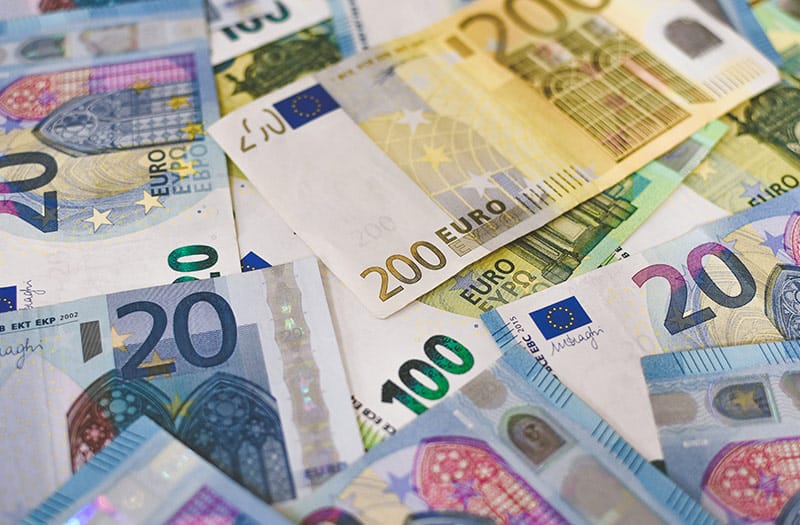
Traditionally, we associate developed market sovereign bonds, e.g. Gilts, as being among the least risky types of investment, as there is a near zero likelihood of a government such as the US or UK defaulting on their debt. However, it’s essential to recognise that these securities are not entirely devoid of risk. This is demonstrated by the experience of those holding the 30 June 2120 Austrian Government bond.
In 2020, the Austrian Government opted to borrow around €5bn which would be repaid over an exceptionally long period, locking in low interest rates at the time, and so a 100-year bond was issued. Assuming the state of Austria continues to exist in its current form, those holding the bond in late June 2120 (unlikely to be many investors alive today) will receive a full repayment on top of their yearly 0.85% interest payment. For contemporary investors, it has been a more turbulent experience.
The extended repayment term of the bond results in a high duration, rendering its price highly sensitive to fluctuations in interest rates. Presently, with European interest rates hovering around 4.5% — considerably higher than at the bond’s issuance — the cost to acquire bonds for a €100 repayment entitlement has dropped to nearly €45. At one point last year, this was close to just €33!
Despite Austria’s status as one of the world’s most creditworthy nations, this bond exhibited a remarkable level of volatility, surpassing Austrian, US, UK, European, and Emerging Markets equities. Notably, it was more than twice as volatile as the headline price index of UK government bonds.
This case underscores the distinction between credit risk and volatility and highlights the potential for significant losses on longer-dated government bonds if they are not held until maturity.

Liquid Gold
As previously discussed, the past twelve months have witnessed an uptrend in asset prices, and remarkably, an unexpected commodity is right up there. Olive oil, now dubbed as ‘liquid gold,’ has experienced a remarkable surge, more than doubling in value within a year and reaching unprecedented highs. In a surprising comparison, olive oil currently holds a value seventeen times greater than crude oil when measured weight for weight.
The driving force behind this surge is an unfortunate decline in olive tree productivity throughout Europe, with crops plummeting by more than two-thirds compared to historical averages. This decline is attributed to extreme weather conditions exacerbated by global warming. A persistent drought across the continent, coupled with warmer winters disrupting the trees’ natural rest cycles, has contributed to this decline. Additionally, wildfires ravaging Greece have resulted in the destruction of over 50,000 olive trees.
Regrettably, this situation has given rise to an alarming increase in theft, with one Greek farmer reporting the burglary of over 100 litres, constituting almost their entire harvest. The unprecedented levels of theft have prompted farmers to resort to innovative measures such as concealing GPS trackers in plastic olives to track crop thefts. Supermarkets have also responded by incorporating anti-theft mechanisms on olive oil bottles, reminiscent of those commonly associated with single malt whiskey.

Spanish Butcher
The Spanish Butcher is an award-winning Spanish and Mediterranean inspired restaurant, which has been operating in Glasgow for the best part of 15 years. Over the years, the Spanish Butcher has welcomed many famous guests including Will Ferrell, Gerard Butler and Paolo Nutini! Their success has resulted in opening a brand-new Edinburgh spot in Spring 2024, as North Capital’s newest and closest neighbours.
The restaurant gives a chic New York loft style vibe, with a modern and relaxed atmosphere, while serving some of the best and most unique steak cuts Edinburgh has to offer. The restaurant has a delicious menu, from their famous 30-month aged Jamón Ibérico de Bellota, to seared scallops and chargrilled octopus and squid.
We very much look forward to taking you to lunch there!
Happy Anniversary, Footsie
2024 marks the 40th anniversary of the Financial Times Stock Exchange’s flagship index, the FTSE 100. Launched in January 1984, the FTSE fast became the leading indicator of how well the UK’s largest companies were performing. It was born out of a collaboration between the Financial Times and The London Stock Exchange.
Whilst its name has remained unchanged over the years, its constituents have not, with many of the stocks forming 1984’s FTSE 100 ringing very few bells with the younger members of North Capital, like the British aircraft manufacturer, Hawker Siddeley, the company behind the legendary Harrier Jump Jet. Of the original 100 companies on 1984’s list, only 26 remain. Despite smoking becoming an increasingly less trendy thing to do, British American Tobacco, one of the original members, provided an annualised shareholder return of 16.4% since 1984 to the end of 2023.
However, pitted against its American rival, the Standard and Poor’s 500, the plucky Footsie has, sadly, been put to shame. Since 1984, the S&P 500 has outgrown its younger cousin by almost 4% p.a. The Footsie’s distinct lack of tech and its large exposure to mining firms has been a major drag on performance. So, too, has the rapid decline in UK pension funds’ allocation to equities, spurred on by the rise in liability driven investing. Remember Liz Truss’ disastrous mini budget?
It seems, therefore, that a mid-life crisis may be in order, and for the industries of the future to start appearing in this legendary index. Nonetheless, Happy Anniversary, FTSE 100.